Commercial cleaning and food safety professionals in Brampton assist restaurants, food centers, baking facilities, warehouses, and food service operations staying compliant. They decontaminate high-contact points, food preparation surfaces, equipment, floors, drains, restrooms, and food handling spaces using certified products, maintaining proper ratios, and recording exposure duration. You require scheduled cleaning determined by hazard level, food throughput, food allergies, and regulatory assessments, plus documented proof backing Hazard Analysis Critical Control Points, audits, and public health compliance. The sections below explains how effective cleaning systems should include.
Key Takeaways
- Food safety cleaning experts from Brampton service restaurants, grocery departments, commissaries, warehouses, bakeries, schools, mobile vendors, and allergen-sensitive operations.
- They treat high-touch surfaces, food-contact equipment, kitchens, floors, drains, restrooms, and storage areas using area-specific procedures to avoid cross-contamination.
- Certified providers check approved sanitizer dilution, compatibility, and exposure duration, then log finalization with tests, reviews, and correction logs.
- Optimal sanitation plans account for hazard, throughput, transitions, accidents, and regulations when assigning routine, periodic, and annual duties by section.
- Vendors ought to demonstrate hazard analysis knowledge, public-health knowledge, WHMIS preparation, protection, endorsements, coded equipment, and audit-ready cleaning documentation.
Which Brampton Venues Need Food Safety Cleaning?
You must adhere to food safety cleaning if your establishment is covered by public health review, food regulations, or HACCP systems. This covers eateries, dining areas, supply warehouses, retail departments, meat counters, fish departments, general stores, and facility-based kitchens.
Proper hygiene protocols continues to be needed in distribution centers, manufacturing facilities, cold storage areas, bakery retailers, educational meal programs, banquet venues, and meal delivery services. Portable temporary ventures matter as well, like catering trucks, festival vendors, and pop-up food booths. Your facility needs established hygiene documentation should your employees handle raw materials, divide prepared dishes, warm meals, or keep allergens stored. In Brampton, cleanliness remains not discretionary; it forms part of legal, operational, and consumer protection compliance.
What Do Brampton Cleaning Professionals Handle?
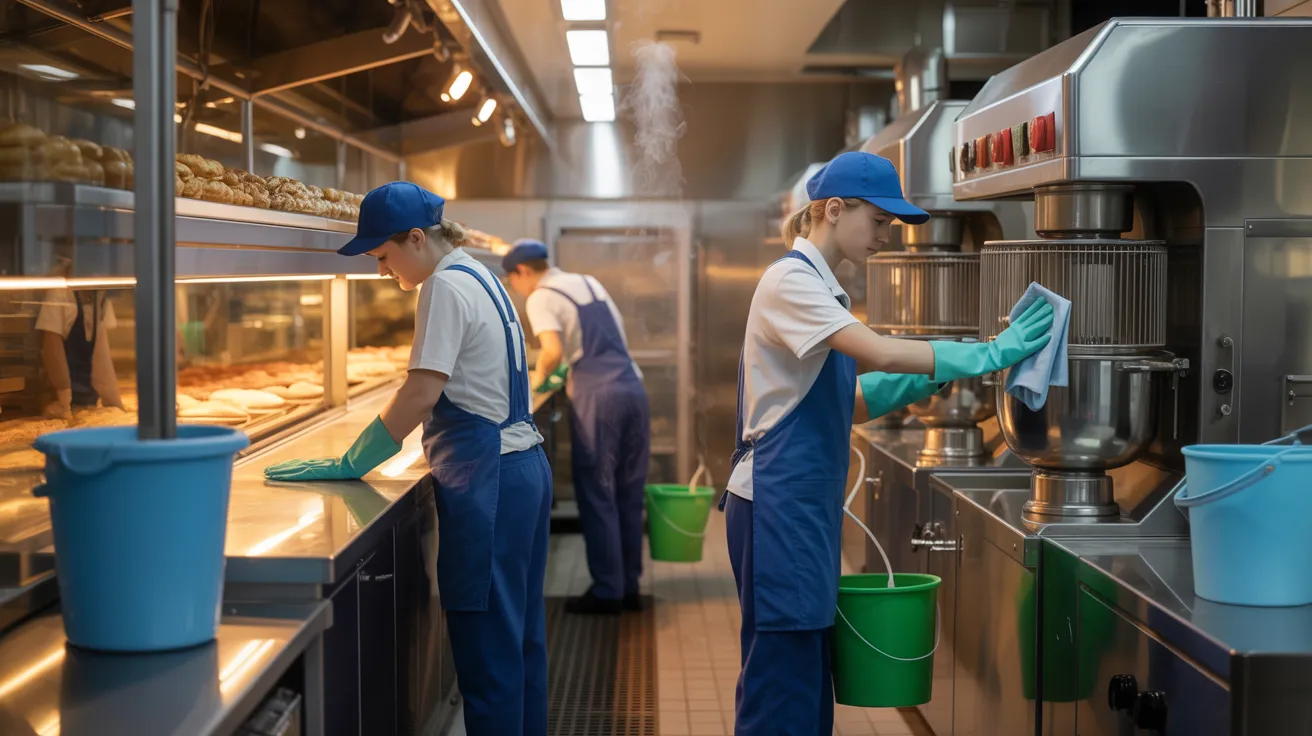
You require experienced cleaning professionals who sanitize frequently touched areas, cooking areas, floor areas, and restroom facilities to maintain food safety and public health requirements. These areas are targeted due to their high cross-contamination potential, slip and fall dangers, and regulatory breaches.
Knowing their service areas enables you to validate your facility's cleaning meets operational demands and regulatory compliance.
High-Touch Surface Cleaning
create a sterilization frequency
verify that cleaning was adequate and document follow-up measures if results fall beyond acceptable limits
Cooking Zones, Walking Surfaces, and Restroom Environments
Expect Brampton cleaning experts to focus on kitchens, floors, and restrooms because each area carries unique foodborne illness prevention, accident prevention, and sanitation risks. In industrial kitchens, you need degreasing on cook lines, equipment exteriors, drains, prep surfaces, and splash zones to reduce bacterial growth and pest activity.
Documented floor care is likewise provided as part of the service.
In restrooms, cleaners treat touchpoints, fixtures, partitions, dispensers, and waste containers then restock supplies and control odours. They also maintain restaurant cleaning supply rooms where product storage, sink cleanliness, and drain systems impact daily sanitation standards and worker protection.
How Food Safety Cleaning Benefits Brampton Operations
Brampton businesses need to implement proper sanitation practices for meeting health code requirements and passing inspections. You also minimize cross-contamination by cleaning and sanitizing food-contact surfaces, equipment, and high-touch areas correctly. Most importantly, you safeguard community wellness by reducing the chance of food poisoning in your establishment.
Regulatory Code Requirements
Since Brampton food companies must follow mandatory safety protocols, your cleaning procedures directly affects your ability to meet health codes, ensure the safety of diners, and eliminate regulatory penalties. You must maintain hygienic food handling zones, documented cleaning schedules, appropriate product handling, and documented employee protocols that correspond to municipal and provincial inspection expectations.
When inspectors evaluate your operation, they analyze whether your cleaning procedures supports protected inventory management, equipment sanitation, refuse management, and washroom maintenance.
Cross-Contamination Prevention
Maintaining regulatory compliance copyrights on your power to stop cross-contamination during everyday food preparation and sanitation. You must separate raw ingredients from ready-to-eat foods, sterilize work zones between assignments, and position cleaning agents away from food surfaces. Explicit protocols lower contamination threats and reinforce steady regulatory adherence.
You might establish allergen separation to prevent priority allergens from contacting common areas, containers, or machinery. Apply separate boards, color-marked equipment, and strict utensil labeling so staff don't mix items throughout cooking or delivery. Enforce washing hands following raw meat, seafood, eggs, or allergen-containing products. Swap cleaning rags frequently, and check sanitizer strength with test strips. When employees learn these procedures each shift, you create a cleaner, safer operation that matches Brampton's safety requirements daily.
Public Health Safeguarding
When sanitation protocols breaks down, you don't just risk a failed inspection—you increase the chance of foodborne illness affecting customers, staff, and the wider Brampton community. You also weaken your role in safeguarding community wellness, especially in busy food facilities where pathogens travel quickly through surfaces, equipment, and touchpoints.
You depend on sanitation protocols that remove soils, properly disinfect, and ensure effectiveness. This involves maintaining contact periods, deploying approved disinfectants, recording schedules, and training employees to fulfill health-unit expectations. These actions support pathogen control by suppressing pathogens before contaminating food or hands. In Brampton, robust sanitation shields vulnerable populations, minimizes disease spread, and proves your diligence. When you maintain standards, you go beyond regulations—you substantially reduce risk and advance safer food handling throughout the city.
In What Ways Does Cleaning Help Achieve Food Safety Compliance?
Strict sanitation practices support food safety compliance by reducing contamination risks, controlling pathogen growth, and maintaining your facility's adherence to sanitation requirements under HACCP-based programs and public health regulations. You verify that food-contact surfaces stay visibly clean and microbiologically controlled, enabling documented preventive controls and inspection readiness.
Well-executed cleaning efforts also strengthen allergen control by clearing residues that can trigger undeclared allergen exposure.
Establishing When to Plan Commercial Cleaning
food-contact surfaces, bathrooms, and high-touch areas
daily routines
What Should You Look For in Brampton Cleaning Experts?
Begin by evaluating providers based on food-safe sanitation requirements—not solely on budget. You should confirm that each organization comprehends CFIA, public health, and HACCP-based requirements applicable to your facility. Request insurance certificates, WHMIS compliance, staff training documentation, and oversight procedures. Assess whether technicians recognize cross-contamination hazards, chemical handling protocols, and verifiable sanitation records.
You should also assess operational reliability and accountability. Request references from food facilities in Brampton, then examine turnaround periods, corrective-action procedures, and communication standards. Confirm the company participates in supplier audits and can present audit-ready records when regulators or third parties request evidence. Check whether equipment is maintained is performed, color-coded implements are used appropriately, and site-specific hazards are recognized. A competent service protects regulatory adherence, product integrity, and your brand reputation.
Which components are part of a Food Safety Cleaning Plan?
Document a plan that defines every sanitation activity, read this article guideline, and role before starting production. You should record cleaning schedules, approved products, ratios, contact periods, tools, and validation approaches for each area, surface, and device. Ensure you include pre-operational inspections, corrective actions, and employee training requirements.
Your plan should also cover contamination prevention, garbage management, pest control procedures, and recorded timelines for bathrooms, drainage systems, surfaces, and food-preparation zones. Explain how you'll keep raw and prepared foods apart, enable ingredient tracking, and ensure accurate allergen labeling through validated cleaning between product changes. You should designate accountability, keep signed records, and review results against regulatory standards, HACCP controls, and customer requirements. When gaps appear, update procedures immediately and retrain staff.
Frequently Asked Questions
Do sanitation providers work during nighttime hours at Brampton facilities?
If you run controlled spaces, you'll also need records that support inspections and ensure compliance.
Do Brampton cleaning experts provide emergency spill response services?
Yes, you can find many Brampton cleaning experts who provide emergency spill response solutions. They handle contamination, evaluate dangers, contain contamination, and start rapid decontamination to reduce exposure and prevent business interruption. You should confirm response times, professional credentials, safety procedures, and disposal procedures. If your facility must meet regulatory requirements, choose a provider that records events, maintains regulatory procedures, and supports audit readiness.
Can plant-based disinfectants be applied securely on food-handling equipment?
In essence, green disinfectants remain safe for food preparation areas provided you choose items marked food-safe that adhere to regulatory compliant. Verify application timing, dilution rates, and rinse requirements ahead of deployment. Plant based formulas minimize chemical burden, although you should obtain demonstration of efficacy against harmful bacteria. To keep surfaces without residue, follow precise manufacturer instructions and ensure the sanitizer complies with food industry regulations.
Can sanitation programs adjust with production fluctuations?
Certainly, cleaning schedules adapt to production fluctuations well. Adjust timing, personnel, disinfectants, and confirmation procedures to fit with seasonal workflows while upholding compliance standards. Limit production interruptions through scheduling sanitation during line changes, peak seasons, and equipment use patterns. Additionally modify procedural documents, employee training, and environmental monitoring to reflect seasonal hazards, new allergens, or increased soiling. Ongoing evaluations maintain the schedule functional.
Will professional cleaning services train employees on sanitation best practices?
Yes, professional cleaning services typically educate your team on hygiene standards. You get employee instruction on proper chemical use, contact times, cross-contamination prevention, equipment disassembly, and record keeping. They generally follow training with HACCP, GMP, and CFIA or local public health requirements. Many also conduct sanitation audits to confirm adherence, identify gaps, and strengthen remedial steps. This helps you maintain consistent procedures, pass inspections, and reduce food safety risks regularly.
Conclusion
Through working with Brampton commercial cleaning and food safety specialists, you do far more than tidy—you ensure your facility for audits and your procedures stay aligned with regulations. From kitchen spaces to processing areas, all clean areas and kept corners help prevent pest problems and avoid major losses. Through booking service on suitable timelines and adhering to a comprehensive cleaning program, you safeguard employees, your patrons, and your standing. Within strict regulatory frameworks, proper sanitation cannot be considered optional—they represent good business practice.
Comments on “Expert Workplace Disinfection”